
Year 6 Transition and Autism in Girls: What to Do Before September | ChildWize
By ChildWize ·
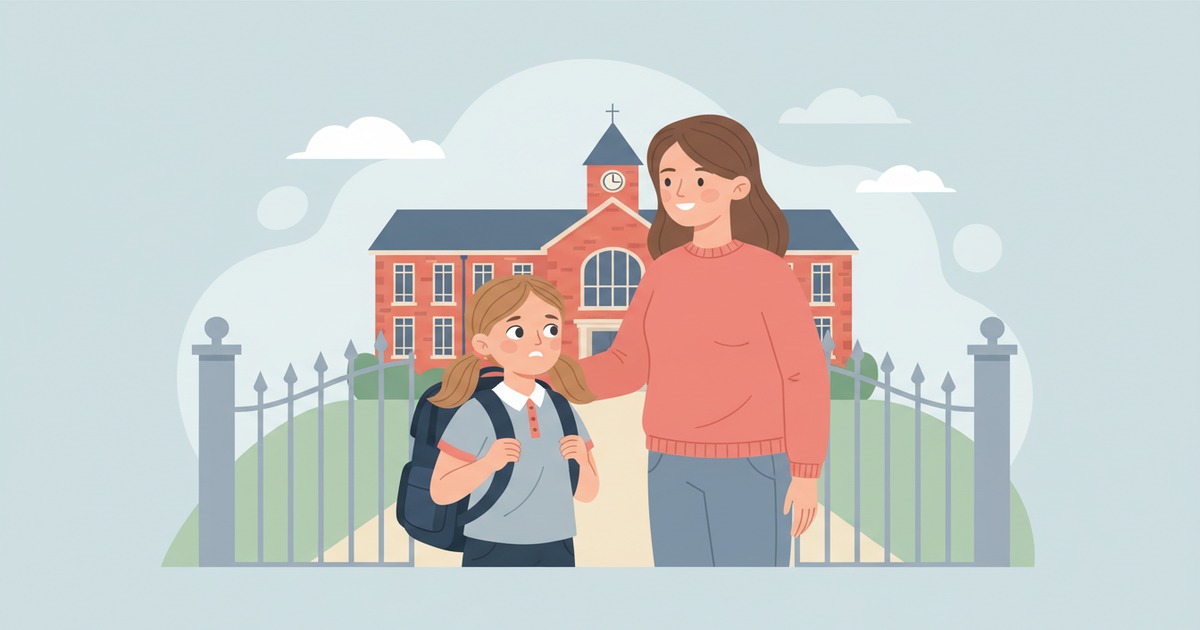
Year 6 Transition and Autism in Girls: What to Do Before September
Research from the Autistic Girls Network found that only 3 out of 17 autistic girls in their study had what could be described as a successful secondary school transition.
That number is worth sitting with. These are not children who were unsupported at primary school, or whose parents weren't paying attention. They are girls who had identification, who had parents advocating for them, and who still, in most cases, found the move to secondary school extremely hard.
For parents of autistic girls currently in Year 6, or girls who are struggling but don't yet have a formal identification, the next few months are among the most consequential of their child's education. What is put in place between now and September, what is asked for, whether an assessment happens: all of it will shape how the first term of Year 7 goes.
This is what you can do before September.
Why secondary school hits autistic girls differently
To understand why the transition is so high-risk, it helps to understand what has been keeping these girls afloat at primary school.
Autistic girls are, on average, considerably better at masking than autistic boys. Masking, the suppression or conscious performance of social behaviour to appear neurotypical, is exhausting, but it works up to a point. Primary school supports masking: one teacher, one classroom, familiar routines, a small social group. The demands are significant but predictable.
Secondary school dismantles all of that at once. New building. Six or seven different teachers. Different room every lesson. Hundreds of children, many of them strangers. A social landscape that is more complex, more performative, and less forgiving. The rules that allowed masking to work are gone.
For many autistic girls, this is the transition where the performance becomes impossible to maintain. What specialists sometimes describe as "the February half-term Year 7 crisis" is a documented pattern: a girl who held herself together through the autumn term, using every reserve she had, who reaches mid-winter and simply runs out.
The parents who have been through this describe it consistently. "She was fine in September." "By October she was anxious but managing." "After half-term she stopped leaving her room."
The standard secondary school transition process was not designed with these girls in mind.
The signs that the transition plan isn't good enough
Every EHCP should be reviewed and updated ahead of secondary school transfer, with a final amended plan issued no later than 15 February of the year the child is transferring. The new plan should name the secondary school and reflect the child's needs in that new setting.
What parents frequently find is that the plan is reviewed, updated in a fairly nominal way, and signed off, but the secondary school hasn't yet been involved in thinking through what the specific provisions mean in practice. A plan might say "access to a quiet space when overwhelmed" without the receiving school having any idea where that space will be, who will facilitate access to it, or how the girl is supposed to ask for it.
For autistic girls specifically, the transition plan needs to cover a few things that are often missed: what the sensory environment of the new school is like and what adjustments are possible; who the girl's point of contact is, a single named adult she can go to; how social lunches and break times will be managed; what the process is for communicating distress when verbal communication becomes impossible; and whether staff in the new school have any training in autistic presentations in girls, which is a significantly different profile from the presentations most staff training covers.
If you read your daughter's transition documentation and it does not address these specifics, it is worth going back and asking for them explicitly, in writing.
What you can do right now, before September
The deadline for phase transfer EHCPs this year has already passed (15 February 2026). But there is still significant time between now and September, and there are concrete things you can do.
Request a dedicated transition meeting with the SENCO at the receiving secondary school. This is separate from and additional to any standard Year 6 to Year 7 induction day. Come prepared with specific questions about provisions, named contacts, and sensory environment. Put your requests in writing so there is a record.
Ask for a summary of what is specifically being put in place for your daughter, not the general SEND provisions, but the individual accommodations. What happens on day one? Who will meet her? Where will she go if she is overwhelmed?
If the EHCP provisions feel thin or generic, you have the right to request an emergency review. This is a formal process that the LA must respond to. You do not need to wait for the scheduled annual review date.
If your daughter does not have an EHCP but you think she needs one, put in a written request for an Education Health and Care needs assessment now. The statutory 20-week clock starts from the date of your written request. A request made in April gives a realistic possibility of having at least initial assessment in place before September.
You can read the full EHCP process at childwize.co.uk/guides/ehcp-process-explained and the step-by-step guide to requesting one at childwize.co.uk/guides/how-to-get-an-ehcp. For the secondary school transition specifically, the ChildWize secondary age guide is also useful: childwize.co.uk/age-guides/secondary-school.
The ChildWize blog post on secondary school transition more broadly covers strategies that apply to all children with SEND making this move: childwize.co.uk/blog/helping-your-child-transition-to-secondary-school-uk.
If you don't yet have a diagnosis
The absence of a diagnosis does not mean there is no need. But it does make it significantly harder to access formal provisions.
If you have been watching your daughter struggle and have not yet pursued assessment, perhaps because she manages at school, perhaps because you've been told she's "too verbal" or "too social" to be autistic, perhaps because the NHS waiting list is measured in years, the next few months are a reasonable window to act.
Private autism assessment for children typically completes within 2-3 months and costs between £2,000 and £4,700 for a multidisciplinary assessment. An assessment begun now has a realistic chance of completing before the end of the summer term, giving you a report to take into September transition conversations.
NHS autism assessment waits in most areas are currently 2-5 years. For a Year 6 girl whose secondary school transition is September 2026, the NHS pathway will not provide answers in time for this transition.
What to expect from an assessment, and how to find a vetted assessor who specialises in girls, is at childwize.co.uk/guides/what-to-expect-from-assessment.
The question we hear parents ask most often is: is it worth it? The consistent answer from parents who have been through the process is yes. Not because the diagnosis fixes anything, but because it gives their daughter an accurate description of herself that is not "lazy," "difficult," or "not trying hard enough." And it gives schools a legal framework within which to provide support they would otherwise find reasons not to.
If you want to talk through the options before committing to anything, a free initial call with an autism assessor on ChildWize takes 15 minutes and costs nothing.
ChildWize connects families with vetted autism assessors, educational psychologists, and transition specialists across the UK. No referral needed. Book a free 15-minute initial call to understand your options.
Related Services
Autism Support & Assessment
If you think your child may be autistic, our specialists can help you understand their needs and get the right support in place.
Learn more →Educational & SEND Support
Navigating the SEND system can be overwhelming. Our specialists help you understand your child's rights and get the support they need at school.
Learn more →