
Storytelling for SEN Children: Boost Speech & Emotional Growth
By ChildWize ·
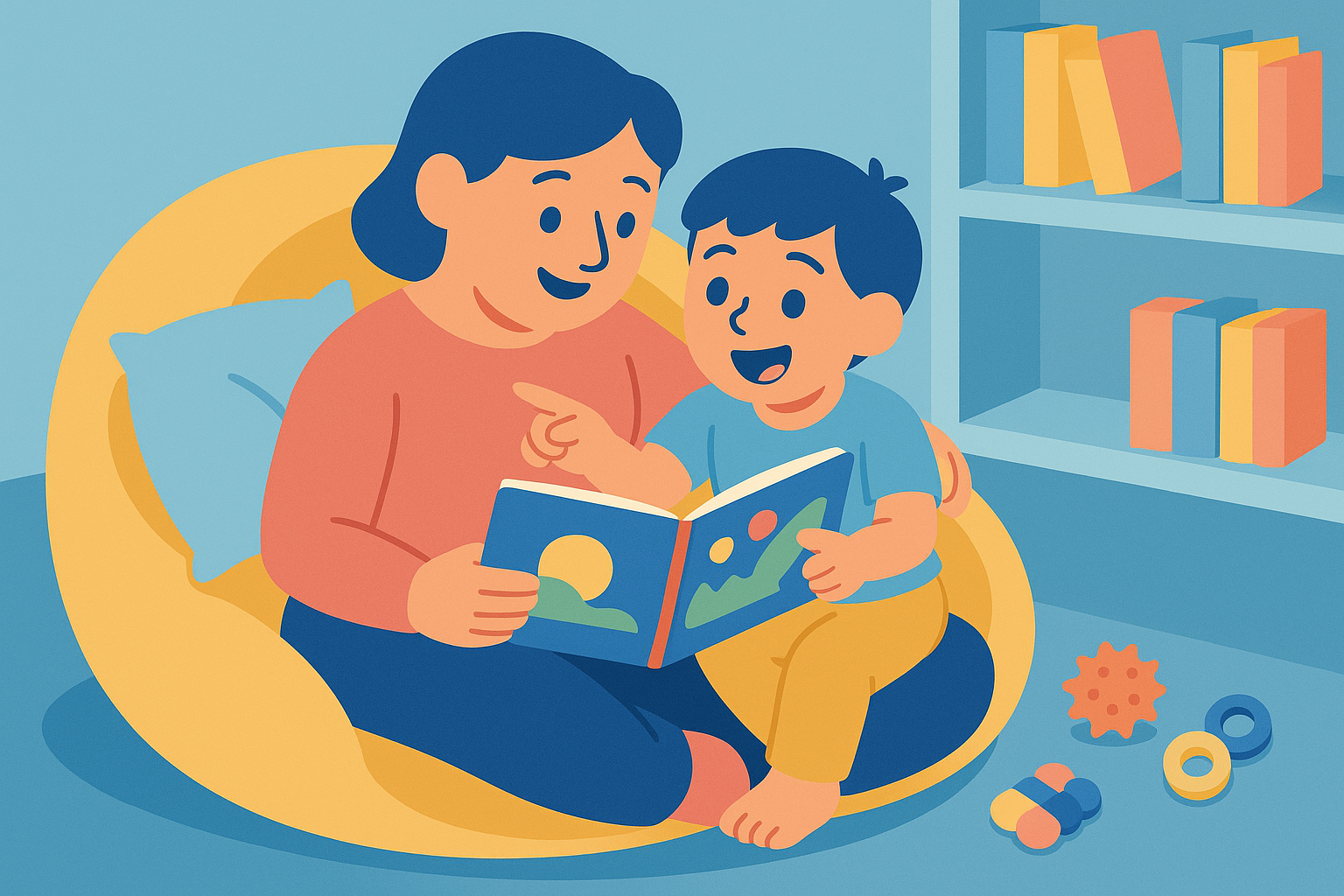
How Storytelling Supports Speech and Emotional Development in SEN Children: A Guide for UK Families
If you're raising a child with special educational needs (SEN), you know how communication and emotional connection can sometimes feel like a daily uphill climb. Whether you're waiting on NHS referrals or trying to find new ways to support your child at home, small tools that make a big difference can be life-changing. One of those tools? Storytelling.
It may sound simple, but storytelling—especially when it's interactive—can play a powerful role in developing your child's speech, language, and emotional skills. Let’s explore how it might work for your family.
Ask your child to 'read' the pictures in a book and make up their own version of the story
Use sensory toys or everyday props to act out favourite scenes
Turn car journeys into storytelling prompts: 'What’s happening in that house we just drove past?'
Creating Connection Through Story Time
Story time is more than just reading aloud. It’s about entering your child’s world, making room for their thoughts and emotions, and giving language a chance to grow naturally. Research shows that when we engage children in conversation around stories—a technique known as dialogic reading—it can strengthen language development and deepen emotional understanding. Try pausing during a story to ask open-ended questions: 'Why do you think the bear felt sad?' or 'What would you do if you were in that situation?' These questions open up space for your child to use their voice, share their view, and stretch their vocabulary.Why Dialogic Reading Matters
For children with speech delays or communication difficulties, dialogic reading isn’t just a nice-to-have—it can be transformative. Getting your child involved in storytelling helps develop critical thinking, listening, and expressive language. It encourages them to connect ideas, understand cause and effect, and build confidence in speaking. Some parents also report that regular storytelling helps their child feel safer discussing emotions. After all, it’s often easier to say ‘the dragon was scared’ than to admit 'I feel scared.’ In UK homes facing long wait times for speech therapy or specialist assessment, these moments of connection can offer both comfort and growth.Navigating Challenges in School and Beyond
If your child is in school, you might find that formal classroom settings emphasise phonics and decoding over verbal interaction. The national curriculum can leave limited time for the kind of rich, verbal back-and-forth that builds oracy—those spoken language skills that underpin emotional expression and social connection. But oracy matters. Organisations like the Oracy Commission have highlighted gaps in spoken language development in UK classrooms. As a parent, you can bridge that gap through everyday conversations and storytelling at home.Small Strategies That Make a Big Difference
You don’t need to be a professional storyteller or have a shelf of fancy books. Here are some simple ways to get started:- Create a consistent story time routine—just 10 minutes after dinner can go a long way
Your Next Chapter Starts Here
Storytelling won’t solve every challenge—but it can spark new moments of connection, learning, and joy. And when you combine that with support from experienced professionals, you’re building something powerful. To find out how ChildWize can help you take the next step, visit www.childwize.co.uk and connect with someone who understands. You don’t have to wait to get the support your family deserves.Related Services
Speech & Language Therapy
If your child is struggling to communicate, our qualified speech and language therapists are here to help your child find their voice.
Learn more →Occupational Therapy
Our paediatric occupational therapists help children develop the skills they need for everyday life, from handwriting to sensory processing.
Learn more →Child Psychology
If your child is struggling with their emotions, behaviour, or mental health, our child psychologists provide compassionate, expert support.
Learn more →