
Speech Delay in SEN Children: UK Guide for Parents
By ChildWize ·
Supporting Speech Development: A Practical Guide for UK Parents of SEN Children
For many UK families raising children with Special Educational Needs (SEN), speech and language development can feel like an uncertain road. You might notice that your child is not meeting typical milestones, or perhaps you're unsure how to spot the signs of a delay in the first place. If you’ve had questions swirling in your mind, you're certainly not alone — and it’s okay not to have all the answers today. Let’s explore what speech milestones might look like for children with SEN and the steps you can take to support their journey — whether you're waiting for NHS support or starting to seek professional insight.What Speech Development Can Look Like in SEN Children
Children develop at their own pace, and this is especially true for those with special educational needs. It’s completely natural if your child takes a little longer to reach speech milestones. Typically, babies begin babbling around six months and say their first words between 10 and 15 months. But for children with additional needs — such as those with Down syndrome or Developmental Language Disorder (DLD) — this process may unfold more slowly or differently. Speech development isn’t only about speaking aloud. It includes understanding spoken words (receptive language), organising thoughts, and forming phrases. Even before your child says their first word, they’re listening, watching, and absorbing. As a parent or carer, you play an irreplaceable role by simply engaging with them — talking, reacting, and being present.Spotting Possible Speech Delays in SEN Children
Identifying delays can be difficult, especially when every child is on a unique timeline. But if your child rarely responds to their name, struggles to follow simple instructions, or finds it hard to express needs clearly, these might be early signs of a speech or language delay. This doesn’t mean alarm bells — but it does mean support could help. In the UK, families often face long NHS wait times for assessments, which can be daunting. But early identification of speech needs (even if informal at first) can help you take small but effective steps at home while your child waits for more formal support.When and How to Seek Professional Input
If you're worried about your child's communication, reaching out to a Speech and Language Therapist through your NHS trust (or privately if possible) is a useful first step. These specialists are trained to assess language development and provide tailored interventions. In some cases, your child may catch up with general language delays over time. But for children with long-term developmental conditions like Autism Spectrum Disorder (ASD) or Developmental Language Disorder (DLD), ongoing support is often needed. ChildWize helps families who are stuck in the system by making it easier to access qualified specialists. Through ChildWize, you can connect with professional support even if you’re still waiting on NHS services.Encouraging Speech and Language at Home
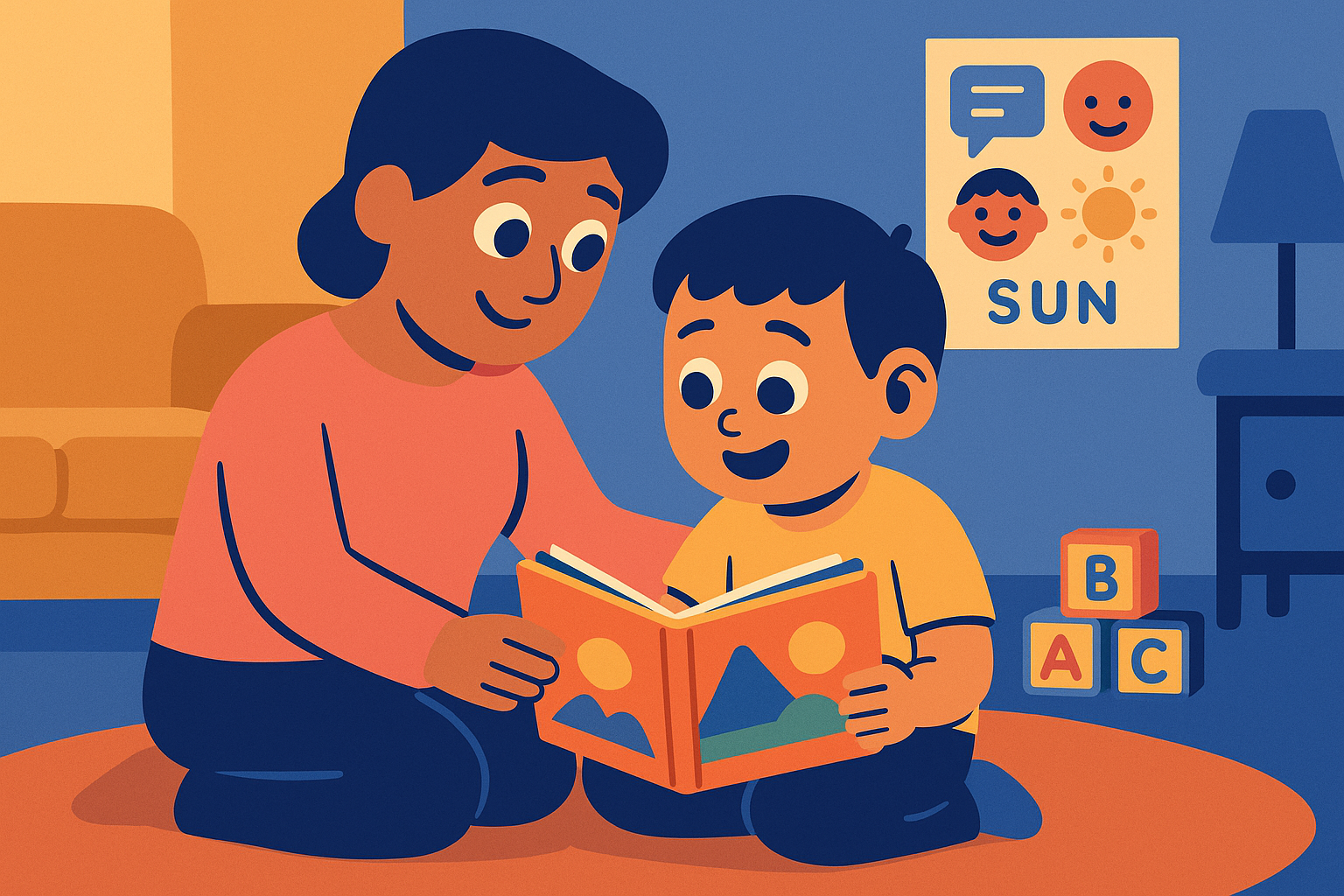
What you do each day makes a meaningful difference. Simple things like making eye contact, pausing to let your child respond, pointing at objects and naming them out loud can help build vocabulary and confidence. Turning daily routines — like getting dressed or making breakfast — into casual conversations builds language skills in low-pressure ways. Reading together is powerful too. Whether it’s storytime before bed or ten minutes curled up with a picture book, stories introduce new words, spark imagination, and encourage interaction. Try stopping to ask, “What do you think will happen next?” or “Where’s the dog in the picture?” to invite conversation. Play is also a natural learning space. Through role-playing, singing songs, or describing what toys are doing, children learn without even knowing they are.UK-Centred Tips for Supporting Speech Milestones
Depending on your child’s age and needs, different strategies can be helpful: • Use real words consistently — instead of always using ‘baby language’, label things as they are to promote vocabulary. • Encourage them to retell simple events like what they did at school or what they see on the walk home. • Involve early years staff or the school’s Special Educational Needs Coordinator (SENCO) to understand what support is already in place. • If your child has an Education, Health and Care Plan (EHCP), make sure it includes communication goals tailored to their needs. • Ask your child’s teaching assistant about what’s working well at school so you can mirror it at home. Even those parenting through tight schedules, carers allowance paperwork, or navigating blue badge renewals will find that these small, daily actions build a foundation of support.You're Not Alone — Help Is Closer Than You Think
Navigating speech development milestones with a SEN child is emotional and ongoing. There may be moments of progress and moments of pause — and that’s okay. At ChildWize, we understand the uncertainty families face while waiting for trusted help. That’s why our platform exists — to connect parents with qualified specialists who can offer assessments, guidance, and reassurance at a time that suits you, even while you’re navigating public service delays. If you’re feeling ready to take the next proactive step, explore how ChildWize can connect you to child development professionals who truly understand. Let's continue this journey together. One word, one step at a time. Visit www.childwize.co.uk to learn more about connecting with a specialist today.Related Services
Speech & Language Therapy
If your child is struggling to communicate, our qualified speech and language therapists are here to help your child find their voice.
Learn more →Educational & SEND Support
Navigating the SEND system can be overwhelming. Our specialists help you understand your child's rights and get the support they need at school.
Learn more →Family Therapy & Parent Coaching
Family life can be stressful when a child is struggling. Our therapists help the whole family communicate better and build stronger relationships.
Learn more →