
Masking in Autistic Children: What Parents Need to Know | ChildWize
By ChildWize ·
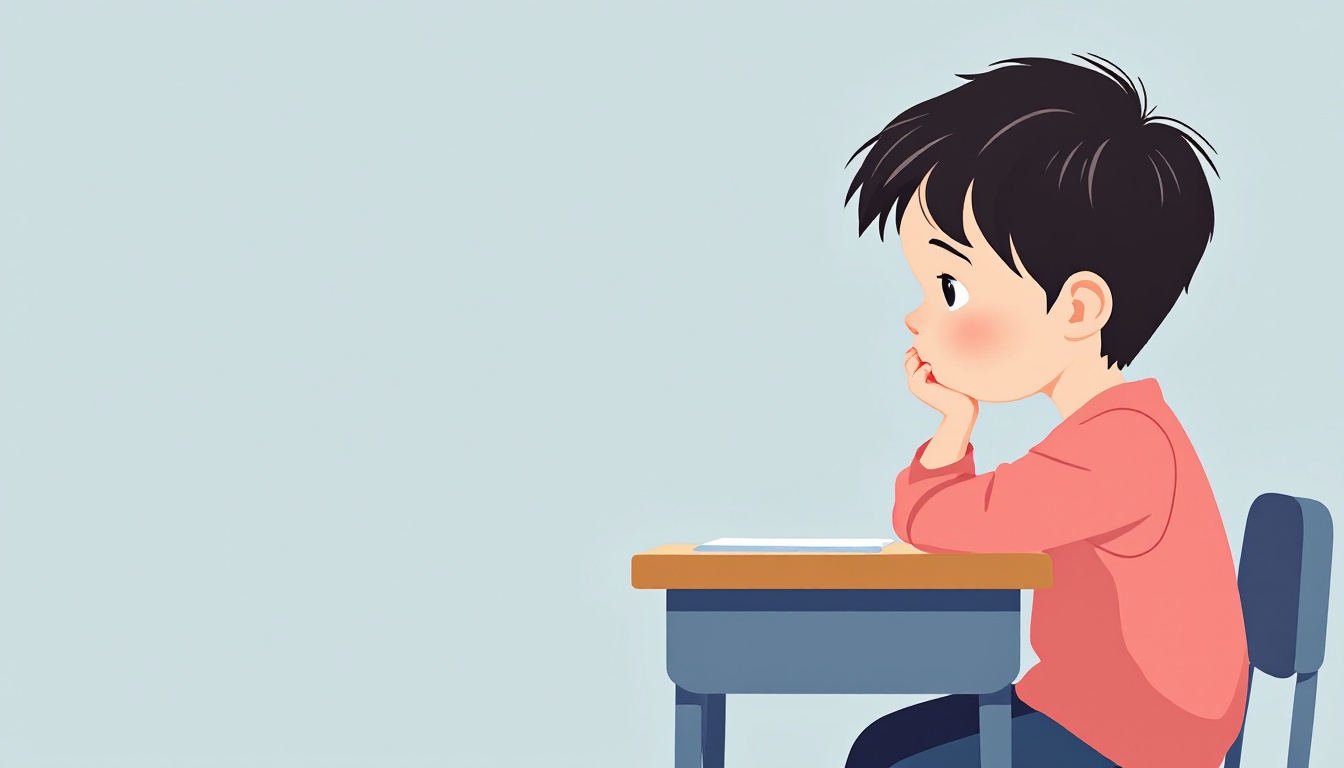
Masking in Autistic Children: What Parents Need to Know
There is a phrase parents say to me more than any other when they are trying to describe what's going on with their child. "She's fine at school. It's only at home that things fall apart." Sometimes it's "he", but more often it is "she", and almost always there is a quiet apology behind it, as though the parent is the one being unreasonable. Their child is, on paper, doing well. But something is wrong, and they know it, and they don't have words for it.
The word for it is masking.
Masking is what happens when an autistic child works out, very early, that the way they think and feel is different from what the people around them seem to expect. So they hide it. They study other children. They borrow phrases. They force themselves to make eye contact even when it feels wrong. They hold the panic of a fluorescent classroom in their body for six hours and let it out the moment they get into the car. By the time they are seven or eight, the hiding has become so automatic that even they don't always notice they are doing it.
That is why your daughter can be the model pupil her teacher describes and the child you are watching unravel on the kitchen floor every Tuesday afternoon. Both are real. The school is seeing the performance. You are seeing the cost.
What masking looks like
Masking is not a single behaviour. It is a set of strategies that an autistic child uses to make themselves more acceptable to a neurotypical world. Some of the most common patterns parents describe to me:
A child who copies social scripts. They watch the most popular girl in the year and study how she laughs, where she sits, what she says when someone tells a joke. The behaviour looks confident from the outside. From the inside, it is rehearsal.
A child who suppresses stimming. The hand-flapping or rocking they do at home doesn't appear at school. Instead, you see chewed sleeve cuffs, raw fingertips, hair-pulling. The need has not gone away. It has gone underground.
A child who never causes a problem. Quiet, helpful, conscientious, the one a teacher describes as "lovely". This child has learned that good behaviour buys safety. They will not raise their hand even when they don't understand. They will not tell you the noise in the playground hurts. They will get on with it.
A child who holds it together until the front door closes. Researchers sometimes call this "after-school restraint collapse". It is one of the most reliable markers of masking I know. A child who has spent the day performing is exhausted in a way that looks, from the outside, like rudeness or volatility. It isn't. It is the bill arriving for everything they held back.
A child whose meltdowns happen in private. Bathrooms. Bedrooms. The five minutes between school and home. They are not unpredictable. They are not "for attention". They are the only place a child has worked out it is safe to break.
If any of this sounds familiar, you are looking at a child who has learned to hide.
Why masking is so often missed
The diagnostic criteria most professionals were trained on were built around boys. Loud, externally dysregulated boys. Children who couldn't sit still, who couldn't follow social rules, whose autism was visible. Girls and quieter boys who learn to mask early do not look like that. They look like they are coping.
The Autistic Girls Network, in their work with UK schools and clinical teams, has documented this gap repeatedly. Girls are referred for assessment later than boys, are more likely to be missed entirely, and are more likely to receive a different diagnosis first, often anxiety or depression in adolescence, when the masking finally cracks.
That cracking has a name in clinical writing. It is sometimes called "autistic burnout". It is what happens when a child has spent years performing neurotypicality and runs out of the energy to keep doing it. It often coincides with a transition. The big one is secondary school. The Autistic Girls Network has data showing that, in their cohort, only three of seventeen autistic girls had what they would describe as a successful secondary transition. The rest experienced a meaningful decline in mental health, school attendance, or both, usually within the first year.
If you are reading this and your daughter is in Year 6, that data should not panic you. It should focus you.
The cost parents need to know
Long-term, undetected masking does not just hide autism. It changes a child's relationship with themselves. A child who has spent years being told their natural responses are wrong, by adults and peers, comes to believe it. They learn that what they feel is unreliable. They learn that the version of themselves the world likes is the performed one. By adolescence, this often shows up as anxiety, low self-worth, or a profound sense of being broken in a way they cannot name.
It is also exhausting in the literal physiological sense. Performing neurotypicality all day uses a level of cognitive and emotional resource that neurotypical adults do not appreciate. When parents tell me their child sleeps for fourteen hours at the weekend or refuses to leave the house on a Saturday, I am not surprised. They are recovering.
This is why early identification matters even when a child is "doing fine". The diagnosis is not a label that creates a problem. It is a name for what is already happening, and a key that opens the door to understanding, accommodations, and support that change the trajectory.
What to do if you suspect masking
The first thing is to trust what you are seeing at home. Schools are well-meaning, and they care about your child, but they are seeing the masked version. You are seeing the whole child. When a parent tells me "she's fine at school but she's falling apart with me", I take that seriously. The school version is not the truth that supersedes yours. It is one half of the picture.
The second is to write things down. Not as evidence in some adversarial sense, just as a record. After-school meltdowns, sleep disruption, sensory complaints, social distress. Patterns become visible when you can see them next to each other.
The third is to consider an assessment. The NHS pathway for autism assessment in children currently runs into years of waiting in most parts of the UK. The CQC reported in 2023 that children referred for autism assessment in England wait, on average, more than three years from referral to diagnosis. That is too long when a child is in distress now.
The private assessment route does not require a GP referral and typically completes in two to six weeks. A multi-disciplinary team, normally a clinical or educational psychologist working with a speech and language therapist, will spend several hours with your child and with you, and produce a report that is recognised by schools, local authorities, and the NHS for ongoing care. ChildWize connects families with vetted, experienced UK assessors who specialise in girls and in late-identified autism. There is no waiting list. You choose who you see.
The fourth, and the one I find parents most often need permission to do, is to stop apologising for noticing. You are not making it up. You are not over-reading. Your child is showing you what they cannot show their teacher, and that takes a level of trust most masking children do not extend to anyone. The fact that they show you is itself meaningful.
If you want to talk to a specialist about whether assessment is the right next step, you can browse our autism assessors directly. If you want to read further on the parallel pattern in girls with inattentive ADHD, we have written about that here: Why Girls with ADHD Are Missed.
You are not waiting for a child to fail before you take this seriously. You are protecting a child who has already been working harder than anyone realises, for longer than they should have had to.
That is not catastrophising. That is being a good parent.
Related Services
Autism Support & Assessment
If you think your child may be autistic, our specialists can help you understand their needs and get the right support in place.
Learn more →Family Therapy & Parent Coaching
Family life can be stressful when a child is struggling. Our therapists help the whole family communicate better and build stronger relationships.
Learn more →