
Why Girls with ADHD Are Missed, and What Happens When They Are | ChildWize
By ChildWize ·
Why Girls with ADHD Are Missed, and What Happens When They Are
There is a particular kind of exhaustion that parents describe when they finally get an ADHD diagnosis for their daughter. Relief, yes. But underneath it, something harder. A grief, almost, for the years when she struggled and no one understood why.
She was the quiet one. The conscientious one. She got on with her work, sat still, never caused the teacher a moment's trouble. She also forgot her homework three times a week, cried silently at home every evening, and lay awake at night replaying conversations she'd got wrong. Nobody noticed, because she was getting through the day. She was performing getting through the day.
If you recognise this, you are not imagining it. And you are not alone.
The pattern nobody was looking for
ADHD was, for a long time, described almost entirely through the lens of hyperactive boys. The fidgeting, the impulsive calling out, the inability to stay in a chair. These are the presentations that shaped the diagnostic criteria and the training that teachers and GPs received.
Girls with ADHD, particularly the inattentive type, don't look like that. Research consistently shows that girls with inattentive ADHD are more likely to internalise their difficulties. They don't externalise the chaos. They contain it. They perform. They mask. And the performing is so convincing that the people around them (teachers, GPs, school SENCOs) see a child who is coping, and file her away as "fine."
Up to 75% of women with ADHD don't receive a diagnosis until adulthood. That statistic is not about adulthood. It is about what happened to these women when they were children in classrooms, raising their hands carefully, double-checking their work, and quietly falling apart inside.
Girls are diagnosed with ADHD, on average, around five years later than boys. Not because their symptoms develop later. They develop at the same time. The delay is in how the symptoms are read.
What it looks like in the classroom, and at home
The inattentive ADHD profile in girls tends to surface differently at school and at home, and this split is one of the most common reasons parents get dismissed.
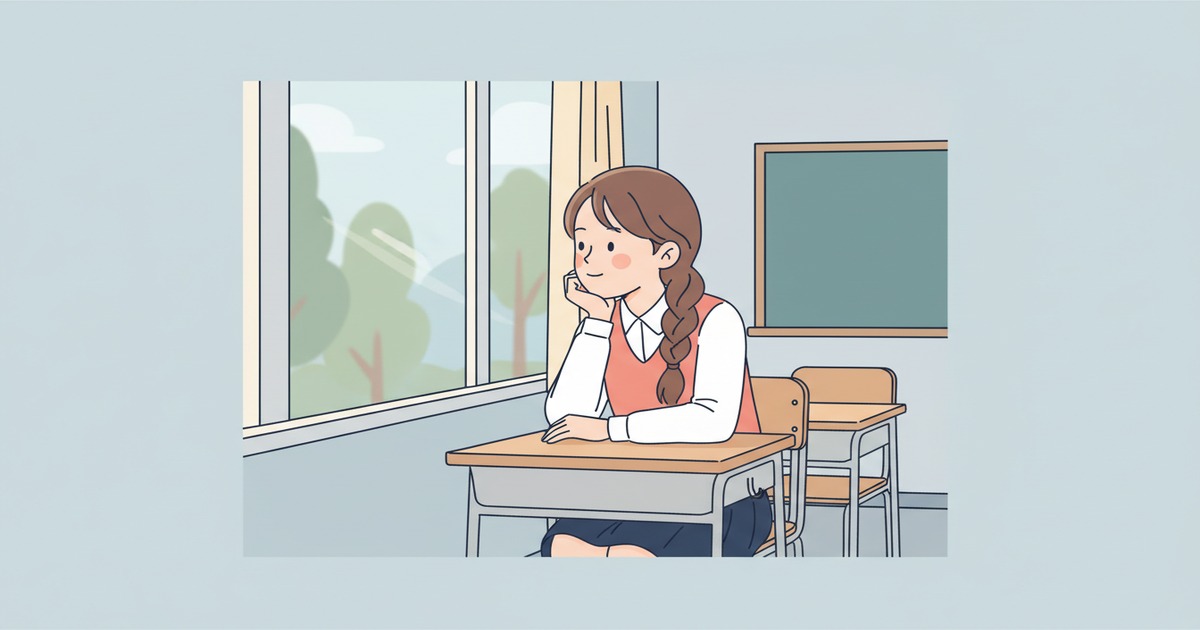
At school, she is often managing. She might be the student who stares out of the window occasionally but brings her work in. She might be quiet, described as "a bit dreamy" but otherwise not flagged. She may even be academically capable, with strength in some areas masking significant difficulty in others.
At home is where the picture changes.
What parents describe is a child who, by 4pm, has no reserves left. The containment that got her through the school day has emptied. The smallest request, whether it's to hang up her coat, to start her homework, or to say what she wants for dinner, can trigger a response that seems completely out of proportion. Parents describe it as their daughter "falling apart" when she walks through the door.
This pattern, managed at school and dysregulated at home, is one of the hallmarks of a masking child. And it is one of the most common ways parents get dismissed when they raise concerns. "She's absolutely fine at school," the teacher says. "There's nothing to worry about."
There is something to worry about. The school is seeing a performance. Home is seeing the cost of that performance.
Other signs that parents commonly recognise in retrospect: difficulty with time and transitions (she is always somehow the last one ready, always losing track of how long things take); perfectionism that looks like high standards but is actually fear of the shame of getting things wrong; intense focus on things she loves and complete inability to direct that focus anywhere else; social difficulties that aren't obvious to teachers but show up in friendship drama, being left out, or intense, exhausting friendships that cycle through crises.
None of these signs are invisible. They are just not the signs anyone is looking for.
What happens when it goes unidentified
There is a common arc that parents of girls with late diagnoses describe. In primary school, she holds it together and gets through. The cracks show at home but not enough to flag at school. She is written off as a worrier, or sensitive, or a bit disorganised.
Secondary school is where the architecture changes.
The structure and familiarity of primary school was what made the masking possible. One teacher. One classroom. Predictable routines. Small friendship groups. Secondary school removes all of that at once. Six or seven teachers, a different room every lesson, hundreds of children, social dynamics of considerable complexity. For a girl who has been holding herself together through sheer effort and familiarity, secondary school is the point where the effort becomes impossible.
Parents describe this as the year everything fell apart. The anxiety that had always been there but managed becomes clinical. The school refusal starts. The self-criticism turns inward, hard.
For many girls, the internal narrative by this point has been running for years: she is not as bright as she thought, she is lazy, she just doesn't try hard enough. The reason she has been telling herself is that the problem is her. Receiving a diagnosis doesn't just name the condition. It undoes a story a girl has been carrying about herself that was never true.
What to do if you recognise this in your daughter
If the description above resonates, the first thing to say is that assessment is more accessible than most parents realise. You do not need a GP referral to access a private ADHD assessment. You do not need to wait for a school referral or for the school to agree there is a problem.
NHS ADHD assessment pathways for children typically take 18-30 months, and in some areas longer. Private ADHD assessment for children usually completes within 2-6 weeks and costs between £500 and £1,500 depending on the provider.
A good assessment will include parent and teacher rating scales, a clinical interview, and a report with specific recommendations for school. Private assessments are accepted by the vast majority of schools. The report does not just provide a diagnosis. It provides a framework for understanding how your daughter works, and what she actually needs.
If you are not sure whether assessment is the right step, starting with a free initial call with a specialist can help you understand what the process involves and whether the profile you're describing fits. That conversation is worth having.
You can read more about what to expect from an ADHD assessment at childwize.co.uk/guides/what-to-expect-from-assessment, and compare the NHS and private routes at childwize.co.uk/guides/nhs-vs-private-assessment.
If you have noticed masking specifically, the ChildWize guide to masking in autistic children is also relevant. Many children presenting with inattentive ADHD profiles also meet criteria for autism, and a comprehensive assessment can look at both: childwize.co.uk/blog/masking-in-autistic-children-what-parents-need-to-know.
The parents we hear from most often say the same thing when they look back: I wish I had done this sooner. Not because earlier would have fixed everything. Because their daughter spent years carrying a story about herself that wasn't true, and she didn't have to.
ChildWize connects families with vetted ADHD assessors, autism assessors, and educational psychologists across the UK. No referral needed. Book a free 15-minute initial call to find the right specialist for your child.