
Enhancing Year 6 Transition with Creative Art Therapy for Children
By ChildWize ·
Enhancing Year 6 Transition with Creative Art Therapy for Children
Introduction
As children prepare to transition from primary to secondary education, the use of creative therapies like art and music can be instrumental in managing the overstimulation and anxiety that often accompanies these changes. This critical period in a child's educational journey is marked by significant emotional and social adjustments. For professionals working in child development, understanding how creative art therapy can aid in this transition is key. This article offers deep insights into employing creative therapy techniques, specifically targeting Year 6 pupils facing the daunting shift to secondary school amid overwhelming sensory inputs.Why This Matters Now
The transition from Year 6 to secondary school is a pivotal phase in child development, often heightened by the sensory overload of new environments and the anxiety of leaving familiar settings. Creative art therapy provides a constructive outlet for children to express and process these complex emotions. Art and music therapy are not only effective in reducing stress and anxiety but also play a crucial role in enhancing a child's self-esteem and resilience during this challenging time. Understanding and applying these therapeutic strategies is essential for child specialists aiming to support smooth and less stressful transitions.Practical Strategies
Implementing Group Art Projects
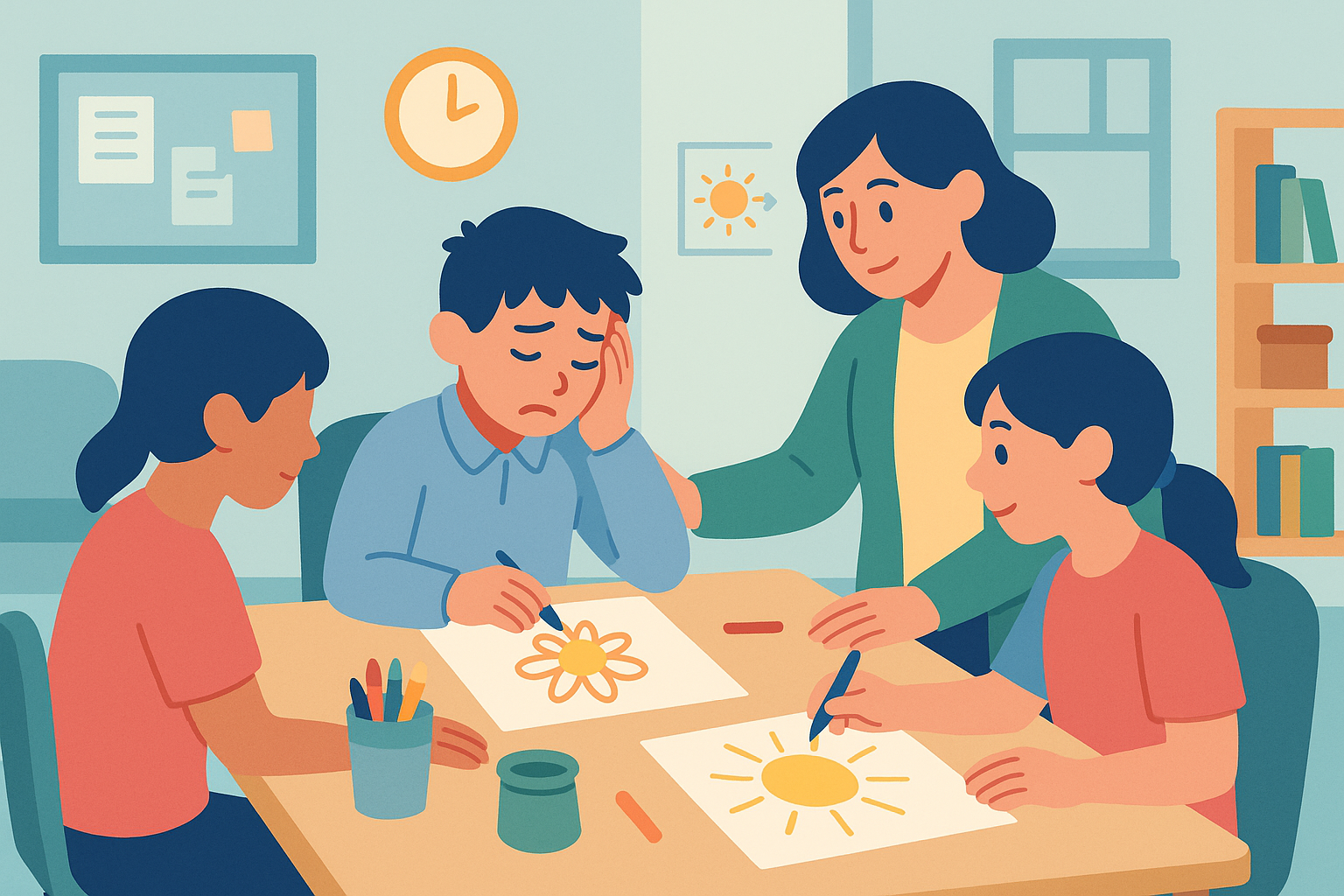
Organising group art projects can be a powerful way to facilitate peer connections and mutual support among Year 6 students preparing for transition. These projects encourage expression and collaboration, allowing children to explore their feelings about upcoming changes while building supportive relationships. Group settings provide a safe space to share anxieties and excitement, making the overwhelming prospect of changing schools less daunting. Techniques like collaborative murals or collective sculptural projects can be particularly impactful, fostering a sense of community and shared experience.Developing Personalised Music Therapy Sessions
Music therapy offers tremendous benefits in managing overstimulation and anxiety. For children experiencing sensory overwhelm as part of the transition process, personalised music therapy sessions can provide a calming influence. By working one-on-one or in small groups, therapists can tailor sessions to address individual needs, employing rhythms and melodies that resonate specifically with each child's emotional state. Such sessions might include activities like composing songs about their school journey or relaxation exercises accompanied by soothing background music, aiding in emotional regulation and stress reduction.Art Therapy Techniques for Individual Expression
Individual art therapy sessions allow children to express worries and fears about the transition in a personal and introspective way. Techniques such as drawing, painting or clay work enable children to depict their perceptions of the new chapter ahead. This method not only helps in articulating feelings that might be difficult to express verbally but also provides therapists with insights into the child’s inner world. These individualised sessions help develop coping strategies tailored to the specific anxieties faced by each child, thereby easing the emotional load of the transition.Planning Ahead
Planning ahead for the transition period involves integrating creative arts into the regular curriculum as early as possible. By incorporating art and music therapy sessions periodically throughout the school year, children gradually become accustomed to expressing themselves and managing emotions through these mediums. Early introduction of these therapies can reduce the peak of anxiety that often coincides with the transition, making it a smoother experience for both children and their families.When to Seek Additional Support
While creative therapies offer significant benefits, it's crucial to recognise when a child needs additional support. If a child shows persistent signs of distress, withdrawal, or anxiety that seems disproportionate even after therapeutic interventions, it may be necessary to consult with a mental health professional. Recognising the signs early and facilitating appropriate interventions can make a substantial difference in a child's ability to cope with transitions.Moving Forward
As we move forward, continuously assess the effectiveness of the therapeutic interventions and remain flexible in adapting strategies to meet the evolving needs of each child. Building a strong foundation in creative therapy techniques now will not only support children through this immediate transition but also equip them with tools to manage future challenges. Encourage ongoing dialogue among educators, therapists, and parents to ensure a cohesive approach to supporting the child's transition.💡 Need more personalised support for your child?
At ChildWize, we understand that every child's journey is unique. Our resources and guidance can help you navigate the challenges and celebrate the successes along the way.